Table of Contents
A DC motor is a vital electrical device that quietly powers countless machines around you, from your ceiling fan to electric cars. These motors have been in use for more than a century, yet they remain one of the most reliable and versatile electrical machines available today.
Keep reading to understand in what ways DC motors can help you and why they are still so important.
Key Takeaways: What is a DC Motor? Types, Uses, and Benefits Explained
- DC motors convert direct current into smooth mechanical motion for countless applications.
- They come in brushed and brushless types, each offering unique performance benefits.
- From EVs to cranes and ceiling fans, DC motors power both heavy-duty and everyday machines.
- Their key advantages include high torque, precise speed control, easy installation, and low cost.
- Even after a century, DC motors remain essential in industries and modern technologies like electric vehicles.
What is a DC Motor?
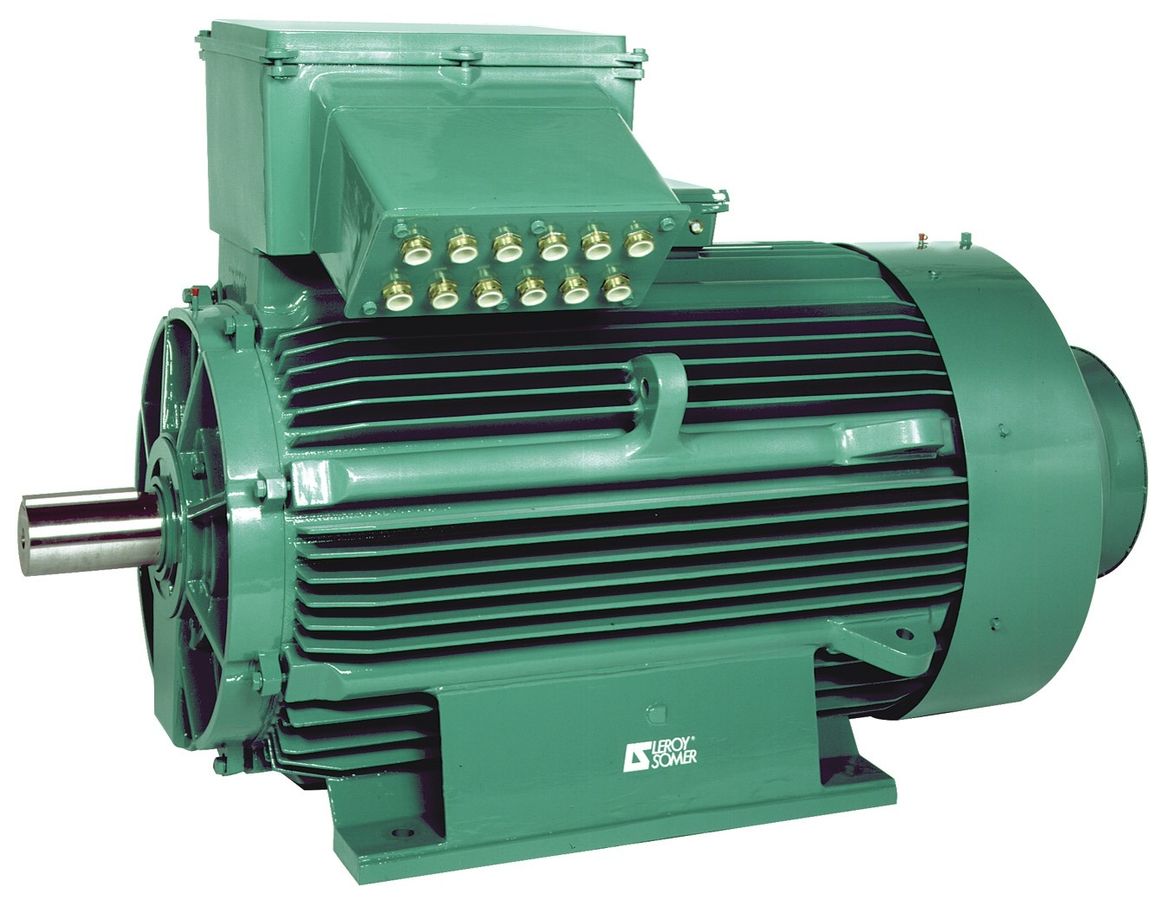
A DC motor is a type of electrical machine that converts direct current (DC) electrical energy into mechanical energy in the form of rotation. It uses the interaction between magnetic fields and electric current inside the motor to control and generate torque and keep the rotor spinning. In simple terms, it turns electricity into motion.
You can find DC motors in fans, pumps, electric vehicles, locomotives, robotics, and many other everyday applications.
Construction of a DC Motor
Here’s a brief overview of some of the parts used in the construction of DC motors:
- Yoke: This is the outer frame that houses a DC motor. It is typically made of either steel or cast iron. Apart from providing the entire assembly with mechanical strength, it also carries the motor’s magnetic flux, which the field winding produces.
- Pole and Pole Shoes: Poles are bolted and welded to the yoke, and they house the field winding. The pole shoes are attached to the pole assembly to support the field coils and uniformly spread the flux through the air gap.
- Field Winding: These are often made of copper and form-wound, connected in series across each pole. The winding is done in a way that they form alternate South and North poles when energized.
- Armature Core: This is the cylindrical rotor of the machine with slots for the armature winding, composed of thin laminated steel discs to reduce eddy currents.
- Armature Winding: Also, former wound, the winding is usually made of copper and rests in slots in the armature. The conductors are insulated from the core and from each other.
- Commutators and Brushes: They physically connect the armature winding. The commutator is an arrangement of copper segments equal in number to the armature coils. These are insulated against each other and provide the current for the armature conductors.
Carbon or graphite brushes rest on the commutator and slide across segments when the motor turns, to supply current and keep physical contact.
How DC Motor work?
The working of a DC motor is based on a straightforward principle: when current flows through a conductor placed in a magnetic field, it experiences a force. This force generates torque, which makes the rotor spin. Here’s a step-by-step look at the process:
-
Magnetic Field Creation
Every DC motor starts with a magnetic field. The stator, which is the stationary part of the motor, produces this field. Depending on the motor design, the field can be generated by permanent magnets or by field windings that carry current. This magnetic field acts as the “push” against which the rotor moves.
-
Current in the Rotor
Next, electricity flows into the rotor (also called the armature). The rotor contains coils of wire that receive direct current through the brushes and commutator. Once the current enters, it produces its own magnetic field around the coils.
-
Electromagnetism and Torque
When the magnetic field from the stator interacts with the magnetic field of the rotor, a force is created on the armature conductors. This force, explained by Fleming’s left-hand rule, produces torque. The torque is what starts the rotation of the rotor shaft, effectively turning electrical energy into mechanical motion.
-
Commutation
One of the most important parts of a DC motor is the commutator. As the rotor turns, the commutator reverses the current direction in the armature windings at the exact right time. This ensures that the torque continues to push in the same rotational direction, rather than reversing or canceling out.
Without the commutator, the rotor would stop after a half-turn when the magnetic poles align. -
Continuous Rotation
Thanks to commutation, the process repeats seamlessly. The current is switched back and forth as needed. This keeps the rotor moving in a continuous loop. The constant reversal of current ensures smooth, uninterrupted motion. That’s why DC motors can run reliably for long periods.
-
Energy Conversion
Throughout this process, the motor is constantly converting electrical energy into mechanical energy. The efficiency of this conversion depends on the motor type. Brushed motors achieve it with mechanical commutation (but need regular maintenance), while brushless DC motors use electronic commutation for a more efficient, low-maintenance design.
What are the Different Types of DC Motors?
DC motors may all run on direct current, but they aren’t built the same way. Their design can vary depending on how the magnetic field is created and how the current is supplied to the armature. These differences affect their speed control, torque, efficiency, and where they are best used. Each of the following types serves a unique purpose.
-
Brushed DC Motors
Brushed motors are the traditional type, using brushes and a commutator to control current flow in the armature. They are simple, cost-effective, and provide high torque at low speeds. These motors can be further classified into the following:
-
Separately Excited DC Motors
Here, the field winding is powered by an independent power source. This allows better speed control and efficiency. -
Permanent Magnet DC Motors
These motors use permanent magnets in the stator. They are compact, energy-efficient, and widely used in small appliances and toys. -
Self-Excited DC Motors
In this design, the field winding is powered by the motor’s own armature. There are three subtypes:- Series Wound Motor: The field winding is connected in series with the armature, producing very high starting torque. Common in cranes and elevators.
- Shunt Wound Motor: The field winding is connected in parallel (shunt) to the armature, offering better speed regulation. Used in fans and blowers.
-
Compound Wound Motor: A mix of both series and shunt windings.
- Cumulative Compound: Combines the advantages of both series and shunt motors, giving strong torque and stable speed.
- Differential Compound: Offers smoother control, though less commonly used.
-
Separately Excited DC Motors
-
Brushless DC Motors (BLDC)
Brushless motors eliminate the brushes and commutator, replacing them with electronic controllers. This makes them more efficient, durable, and quieter compared to brushed motors.
- These are precise, controlled BLDC motors widely used in robotics, CNC machines, and automation systems.
What are the Uses of DC Motors?
DC motors are incredibly versatile, which is why they are found in both small household gadgets and heavy industrial machinery. Their ability to provide high torque, smooth speed control, and reliable performance makes them ideal for countless applications. Here are some of the most common ones:
-
Diesel Electric Locomotives
DC motors are the backbone of diesel-electric trains. They provide the massive torque needed to move heavy railcars from a standstill and keep them running steadily over long distances. Since trains often operate under variable loads and gradients, the precise control offered by DC motors makes them highly reliable in railway systems.
-
Electric Vehicles
Modern EVs rely heavily on DC motors for their quick response and efficiency. These motors deliver instant torque, allowing vehicles to accelerate smoothly without delay. Their ability to adjust speed easily also helps extend battery life, making them an essential component in today’s push for greener transportation.
-
Cranes
Cranes require strong lifting power to move heavy loads safely, and DC motors are perfect for the job. Their high starting torque ensures that cranes can pick up weight without stalling. Additionally, operators benefit from accurate speed control, which helps with the precise lifting and lowering of materials in construction and industrial sites.
-
Conveyor Systems
Factories and warehouses often use conveyor belts powered by DC motors to move goods along production lines. These motors provide smooth, consistent motion and can be easily adjusted to match the pace of operations. Their reliability reduces downtime, making them vital for efficient material handling.
-
Ceiling Fans
Many energy-efficient ceiling fans today use DC motors instead of traditional AC ones. They consume less electricity, produce less noise, and allow for a wider range of speed control. This makes them a popular choice in homes and offices where comfort, cost savings, and quiet operation are important.
-
Pump Drives
Water pumps, fuel pumps, and other fluid-moving devices often use DC motors because they deliver steady performance. These motors can handle continuous operation while maintaining consistent pressure and flow. Their durability in demanding environments makes them suitable for everything from household water pumps to industrial pumping systems.
-
Elevators
Elevators rely on DC motors for their excellent torque and speed control. The motor must start smoothly, lift heavy loads vertically, and stop precisely at the right floor, all of which DC motors handle well. Their reliability and safety features make them the preferred choice in both residential and commercial buildings.
What are the Advantages of Using DC Motors?
DC motors remain popular because of the many benefits they offer across industries and household applications. Some of them are:
-
Startup Torque
DC motors are well-known for their high starting torque. It allows them to move heavy loads right from a standstill. This feature makes them ideal for applications like elevators, cranes, and locomotives.
-
Linear Speed Torque
They maintain a nearly linear relationship between speed and torque, ensuring smooth performance. Their balance makes them dependable in machines that need steady operation.
-
No Harmonic Effects
Since they run on direct current, DC motors do not create harmonic distortions in the power system. This reduces the risk of interference with other electrical equipment.
-
Speed Control
One of their biggest advantages is precise speed control. Adjusting the supply voltage or armature current easily changes motor speed, making DC motors suitable for tasks that require variable speeds.
-
Installation
DC motors are relatively simple to install and integrate into systems. Their straightforward design reduces setup time and makes them versatile for different applications.
-
Maintenance
Although brushed motors require some upkeep, overall, these motors are easy to maintain and repair. Their spare parts are also widely available.
-
Low Cost
Many DC motors, especially brushed designs, are affordable to purchase and operate. This makes them a cost-effective choice for both small DIY projects and large industrial systems.
DC motors may be one of the oldest types of motors, but they remain highly relevant. Their ability to provide high torque, precise speed control, and reliable operation makes them indispensable in industries and households alike. From running elevators to powering electric cars, DC motors continue to prove their worth.
Whether you are a professional electrician or a DIY hobbyist, knowing the basics of DC motors helps you choose the right one for your project.
Get top-quality electrical materials at competitive prices.
FAQs
-
How do AC and DC motors differ from one another?
AC motors are frequently utilised for applications requiring continuous speed and operate on alternating current. They often require less upkeep and last longer. Conversely, DC motors are used when precise speed control is required. They run on direct current and employ brushes and commutators (or electronic controllers in brushless kinds).
-
Why is it simpler to regulate speed in DC motors?
Because the armature current or supply voltage can be directly changed, speed control with DC motors is straightforward. They are therefore ideal for applications requiring varying speeds.